
Fabriqué en Grande-Bretagne

Directement de notre usine

Livraison gratuite le lendemain

Pour toute commande supérieure à 750 £

Résultats du test produit

Tous les résultats des tests publiés

Conseils techniques d'experts

Appelez ou discutez avec notre équipe

A coating is only as sound as the floor beneath it

Oil and grease left in a floor stop paint reaching the substrate. Degreasing first removes the contamination so the coating bonds to the floor, not to what is sitting on it.

Profil de performance

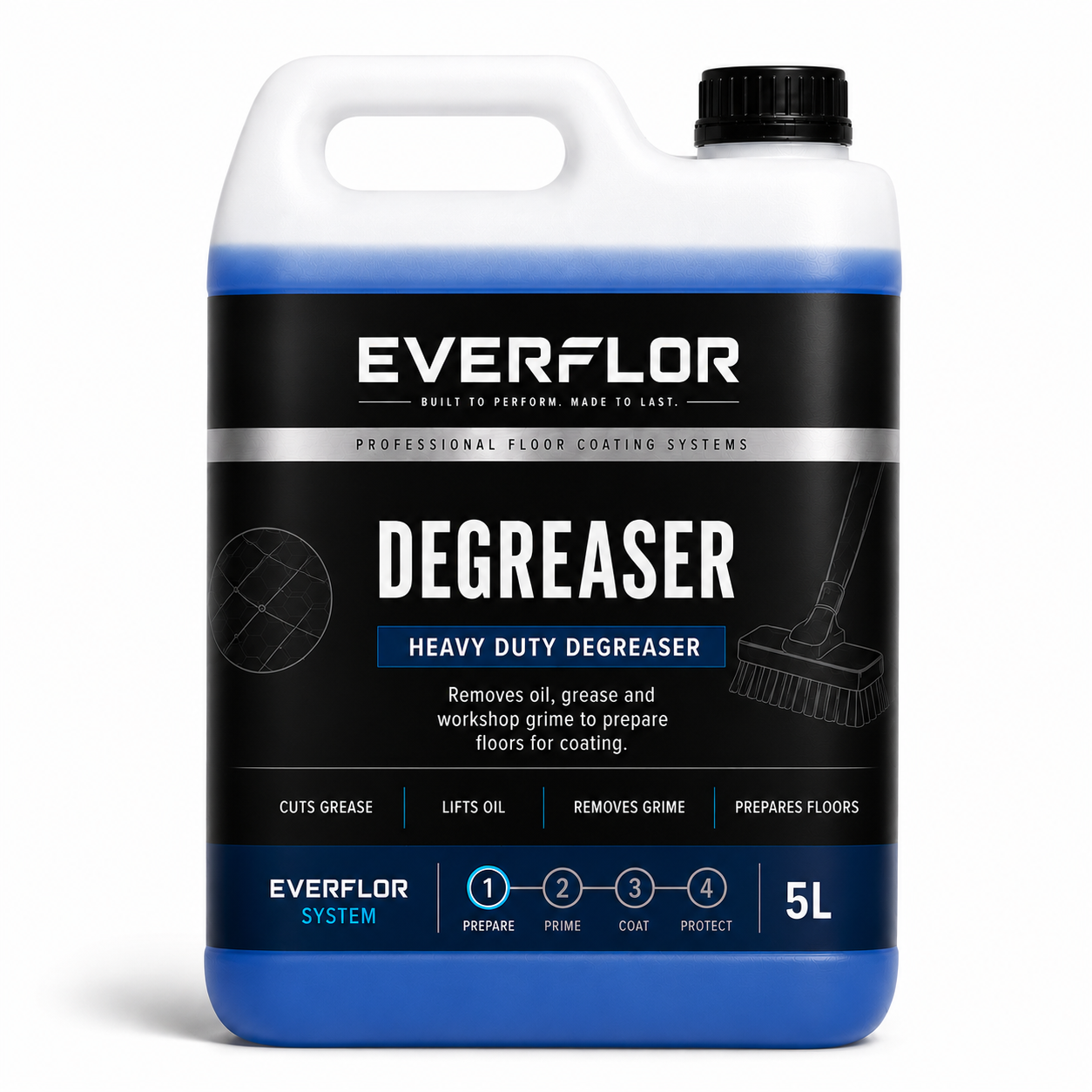
Trade Floor Preparation Degreaser. A clear liquid cleaner used ahead of floor coatings to remove oil and grease from the substrate. Supplied in 5 litre and 20 litre containers.

Télécharger la fiche technique
General Cleaning 50:1Dilution with water
Heavy Cleaning 20:1Dilution with water
Colour ClearLeaves no colour on the floor
Pack Sizes 5L & 20LSmall areas to full floors

Informations essentielles

Détails du produit

Description

EverFlor Degreaser is a clear liquid cleaner concentrate for floor preparation. It is used to lift oil, grease and general soiling out of a floor before a coating is applied, and as a cleaner on floors that have picked up contamination in service.

Most floor coating failures start with preparation. A film applied over oil or grease bonds to the contamination, not the substrate, and releases under traffic. Working the degreaser into the surface breaks down the deposits so they can be scrubbed loose and rinsed away, leaving a clean, sound floor to coat onto.

Use it as the first stage of an EverFlor floor coating specification, ahead of any primer or paint. Supplied in 5 litre and 20 litre containers.

Recommended areas of use

  • Preparation of floors prior to painting or coating
  • Removal of oil and grease deposits from floors
  • General cleaning of contaminated floor areas
  • Cleaning down before repair work is carried out

Features

  • Clear liquid, so it leaves no colour behind on the floor
  • Supplied as a concentrate, so one container makes up a large volume of wash solution
  • Lifts oil and grease out of the surface rather than spreading it around
  • Prepares the substrate so the following coat bonds to the floor itself
  • Applied with ordinary site kit — stiff broom, brush or mechanical scrubber
  • Rinses off with clean water
  • Available in 5 litre and 20 litre packs for small areas and full floors

Dilution

The degreaser is supplied as a concentrate. Dilute it with water before use.

Mix 50:1 with water for general cleaning. Mix 20:1 with water for heavy cleaning.

Make up only as much as you can use across the section you are working on.

Good to know

Heavily contaminated floors may need a second pass. Check the surface after rinsing and repeat where staining or a greasy feel remains.

Allow the floor to dry before coating. Trapped moisture in the substrate will affect the coating that follows.

Do not allow washings containing oil and grease to enter surface water drains. Collect and dispose of them in line with local requirements.

Application

SURFACE PREPARATION

Sweep or vacuum the floor to remove loose dirt and debris. Cover or move anything nearby that must not get wet. Split larger floors into sections you can wash and rinse before the degreaser dries on the surface.

DILUTION

The degreaser is supplied as a concentrate. Dilute it with water before use. Mix 50:1 with water for general cleaning. Mix 20:1 with water for heavy cleaning. Make up only as much as you can use across the section you are working on.

APPLICATION

Shake the container before use. Spread the diluted degreaser onto the floor with a stiff broom or brush and work it into the contaminated area. Leave it to dwell so it can penetrate the oil and grease. Scrub the area with a stiff broom or a mechanical scrubber to lift the deposits out of the surface.

RINSING AND DRYING

Rinse with clean water, scrubbing while you rinse. Lift the washings with a wet vacuum where they cannot be flushed away. Inspect the floor once rinsed and repeat the process on any area that is still stained or greasy to the touch. Let the floor dry before any primer or coating is applied.

CLEAN UP AND DISPOSAL

Wash equipment with clean water after use. Do not let washings containing oil and grease enter rainwater drains or watercourses. Collect the residue and dispose of it in accordance with local regulations.

Le Centre de Connaissances

Tout ce que vous devez savoir

Parcourez notre collection d'articles détaillés et de guides pratiques conçus pour vous aider à tirer le meilleur parti de ce produit. Que vous ayez besoin d'aide pour la préparation des surfaces ou de conseils d'application, nous avons ce qu'il vous faut.
Afficher le Centre technique

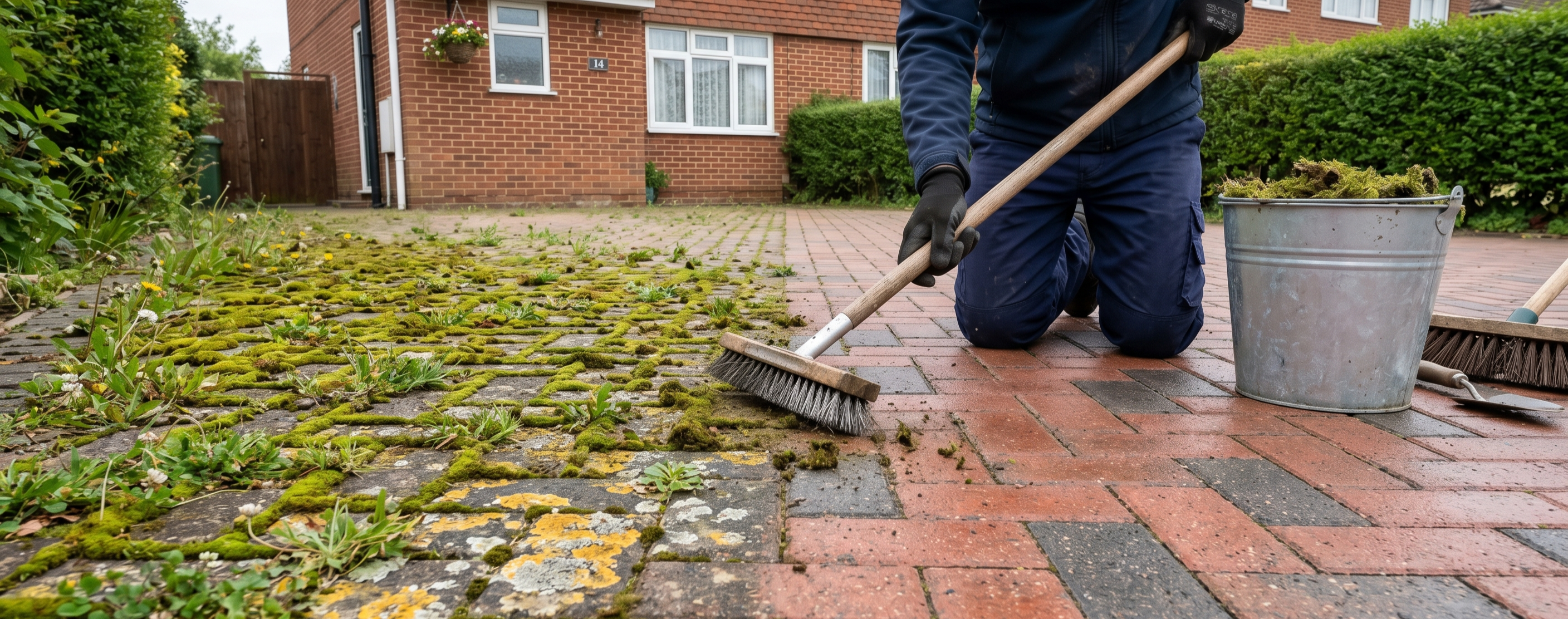
A visual comparison of a mossy, weed-infested block paving driveway next to a freshly cleaned section in the UK.
  • par Sam Marriott

Restauration de pavés autobloquants : Élimination de la mousse, des mauvaises herbes et du lichen
Le pavage est le choix le plus populaire pour les allées au Royaume-Uni, mais il présente un défaut de conception majeur : Les joints. Ces milliers d'espaces entre les briques sont le terreau idéal pour les mauvaises herbes, la mousse...

Plus

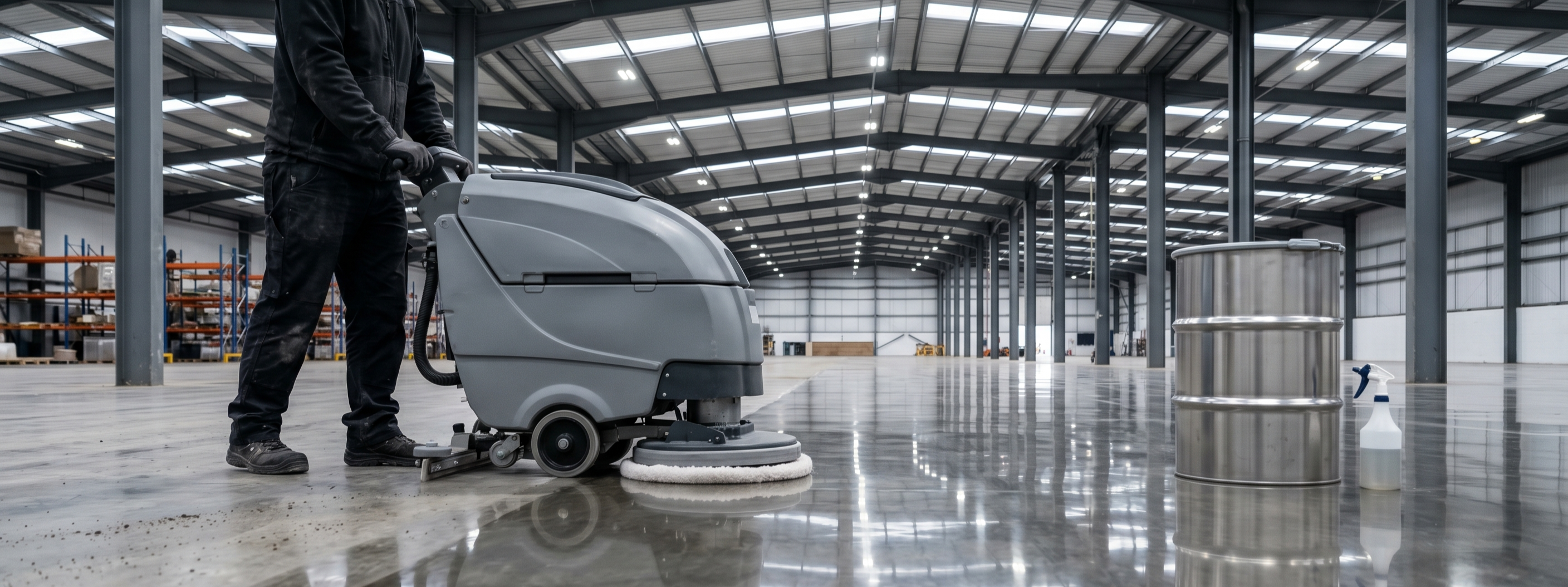
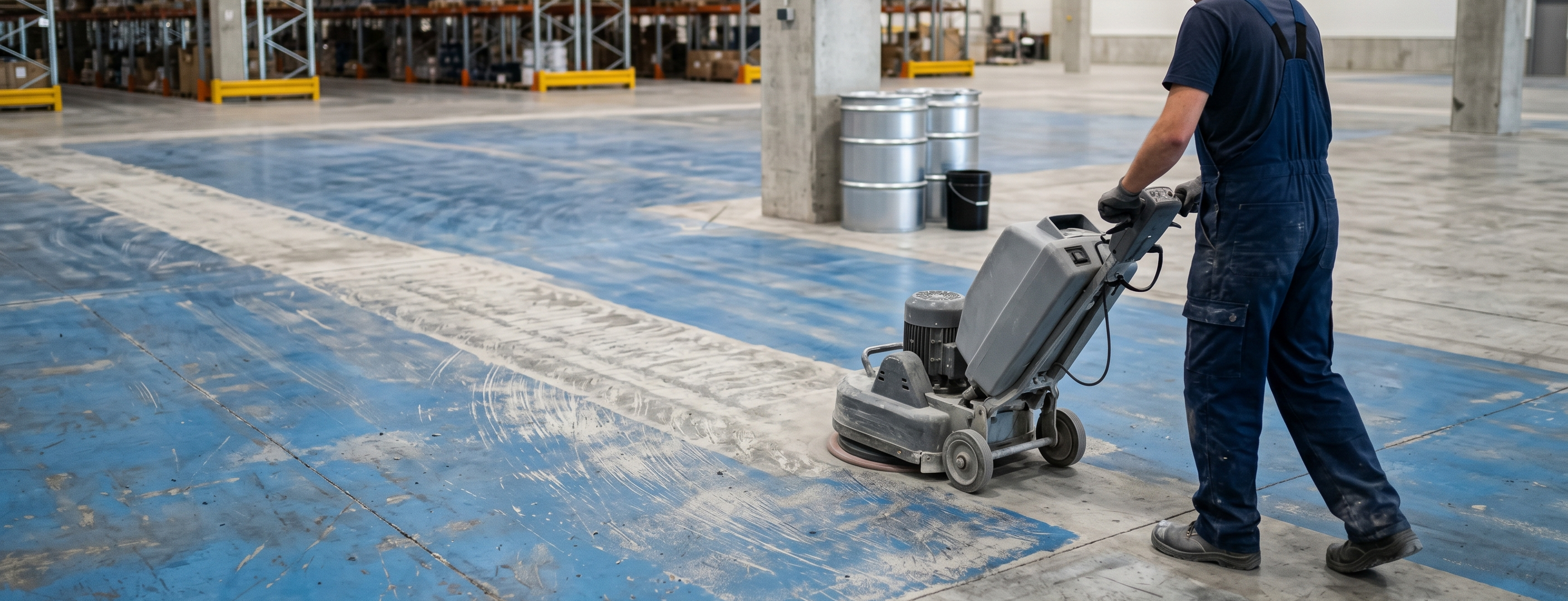
An unbranded industrial floor scrubber being used to maintain the high-gloss shine on a polished concrete warehouse floor.
  • par Sam Marriott

Nettoyer en profondeur le béton poli sans ternir sa brillance
Le béton poli est souvent vendu comme l'option de revêtement de sol "sans entretien". C'est un mensonge. Oui, il est incroyablement durable. Il ne s'écaillera pas comme de la peinture. Mais si vous l'ignorez, ou pire – si vous le...

Plus

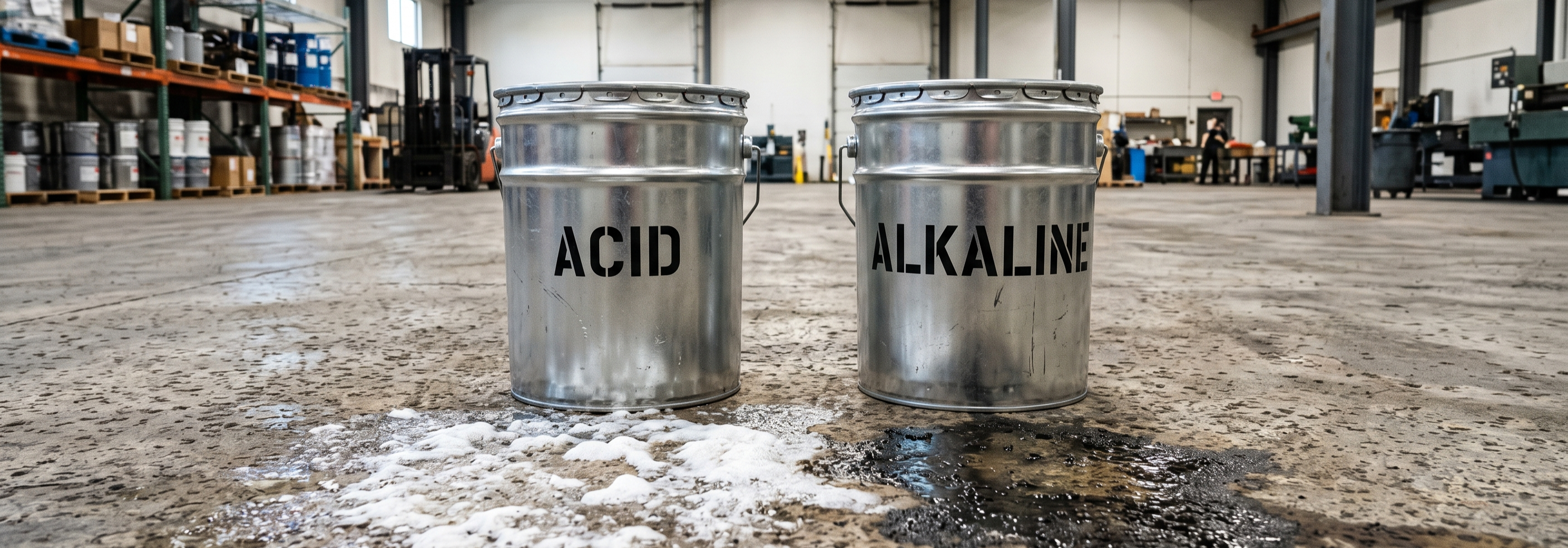
Two unbranded silver tins labeled Acid and Alkaline on an industrial concrete warehouse floor.
  • par Sam Marriott

Nettoyants pour béton acides ou alcalins : Lequel est le meilleur pour votre sol ?
Si vous entrez dans une quincaillerie et demandez un "nettoyant à béton", vous vous retrouverez probablement avec plusieurs options devant vous. La plupart des gens choisissent la bouteille avec l'étiquette d'avertissement la plus agressive, pensant que "plus c'est fort, mieux...

Plus

How to Sand a Painted Concrete Floor for Recoating
  • par Sam Marriott

Comment poncer un sol en béton peint avant de le repeindre

Dans notre guide Ponçage vs. Meulage : Préparation du béton précédemment peint, nous avons établi que si votre sol réussit le test d'adhérence par quadrillage, l'étape suivante pour un nouveau revêtement sera le ponçage. Choisir de poncer plutôt que de meuler vous fait économiser des centaines de livres...

Plus

FAQ

Veuillez consulter notre page FAQ pour en savoir plus.

Why degrease a floor before painting it?
Because a coating applied over oil or grease bonds to the contamination rather than the substrate. That bond fails under traffic, showing as patchy adhesion, flaking and lifted film. Degreasing removes the contamination so the coating grips the floor itself.
What is the best way to apply it?
Dilute the concentrate with water first. Spread the diluted degreaser over the floor with a stiff broom or brush and work it into the surface. Let it dwell so it can penetrate the deposits, then scrub with a stiff broom or a mechanical scrubber. Rinse thoroughly with clean water.
How long should I leave the floor before coating?
Let the floor dry out fully after rinsing. Moisture left in the substrate will affect the primer or paint that follows. Check the surface is clean, dry and free of residue before you start the coating specification.
What if the floor is still greasy after one wash?
Repeat the process. Heavily contaminated floors may need a second pass. Reapply the degreaser to the areas still showing staining or a greasy feel, scrub again and rinse.
How should I dispose of the washings?
Do not allow washings that contain oil and grease to enter rainwater drains or open watercourses. Where drainage is restricted, lift the residue with a wet vacuum and dispose of it in line with local regulations.

Vous n'avez pas trouvé votre réponse ?

N'hésitez pas à nous contacter