

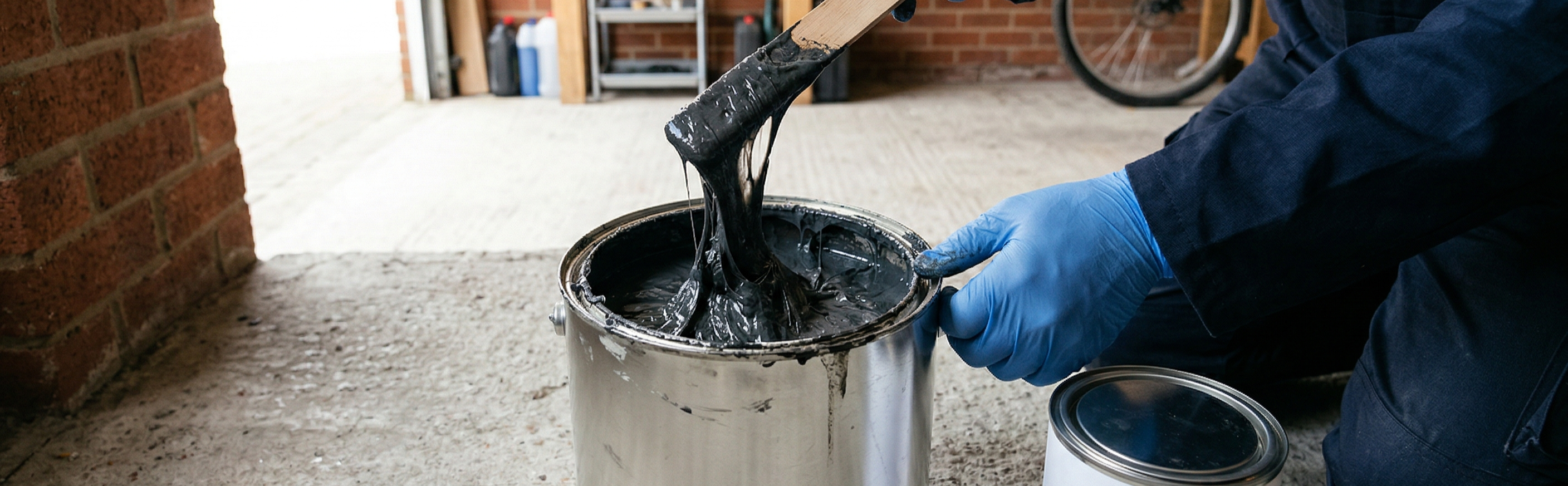
Two-pack epoxy can be at risk of hardening prematurely - a process known as "flash curing" - this happens when the chemical reaction generates heat faster than it can dissipate it, causing a runaway reaction.
This can be triggered by several factors, including; ambient temperatures, leaving large volumes of mixed material in the bucket (concentrating the thermal mass), or using material that has been stored in a warm environment. To prevent this, always store your tins in a cool area, mix only one kit at a time, and immediately pour the mixed resin onto the floor to allow the heat to escape.
-
Exothermic Heat: The "cure" is a chemical reaction that creates its own heat; if that heat is trapped in a bucket, it accelerates the reaction exponentially. See our blog The Exothermic Reaction: Why Your Epoxy Bucket is Getting Hot for more information.
-
Thermal Dissipation: Pouring the mix onto the cooler concrete slab "kills" the heat build-up, extending your working time significantly.
-
Ratio Integrity: Two-pack systems are chemically balanced; altering the ratio to try and "slow it down" will only result in a sticky, failed floor.
→ Shop EverFlor - EnduraCoat HB
The Chemistry of the Flash Cure: What Actually Happened?
A two-pack epoxy does not dry in the same way that other, standard paints do. Where a standard single-pack paint would typically dry through a process of solvent evaporation, two-pack epoxy paints instead harden as a result of a chemical reaction initiated when the Part A is mixed with the Part B.
When two-pack epoxy paints are mixed, they begin undergoing a complex chemical transition called exothermic polymerization. When Part A (Resin) and Part B (Hardener) meet, they begin to form cross-linked molecular chains. This reaction releases heat as a byproduct.
The "Pot Life" listed on the tin is the window of time you have to apply the product before it becomes too viscous to work. However, this time is measured in a laboratory at exactly 20°C. If your garage is 25°C or your tins have been sitting in the sun, that pot life can be cut in half instantly. Once the material in the bucket reaches a certain temperature, it enters a "runaway" state where the heat from the reaction feeds the reaction itself, causing the bucket to smoke, melt, or turn into a solid block of plastic within minutes.
Critical Troubleshooting: Why Your Mix "Went Off" Early
1. The "Bucket Mass" Error
The most common mistake is keeping the mixed epoxy in the bucket while you "cut in" the edges. In a bucket, the chemical heat is concentrated in a deep, narrow mass. This creates a "thermal oven." The Solution: As soon as you finish the 3-minute mix, pour the epoxy onto the floor in long "ribbons." On the floor, the heat is spread over a wide area and absorbed by the cool concrete slab, essentially "stopping the clock" on the flash cure.
2. Warm Material Storage
If your epoxy tins were stored in a van, a shed, or direct sunlight before mixing, the chemicals are starting at a high base temperature. This "pre-heats" the reaction. The Solution: Store your material in a cool, shaded area for at least 24 hours before use. In mid-summer, some professionals even sit the Part A tin in a bucket of cool water (avoiding any water ingress) to bring the core temperature down before mixing.
3. Mixing Multiple Kits Simultaneously
It is tempting to save time by mixing two or three 5kg kits into a single large bucket. This is a recipe for disaster. Doubling the volume doesn't just double the heat; it increases the thermal mass significantly, leading to a much faster hardening time. The Solution: Only mix one kit at a time. Do not begin mixing the second kit until the first is fully spread and back-rolled.
4. Incorrect Mixing Ratios
We supply our Two-Pack Epoxies in exact, pre-weighed ratios. Some users attempt to use "half a kit" and guess the measurements. If you accidentally add too much hardener, you increase the reactive sites, which speeds up the heat generation and leads to a flash cure. The Solution: Always mix the full contents of both tins. If you must mix a partial kit, you must use an electronic scale to maintain the exact ratio specified on the technical data sheet.
The Role of Material Age and Oxidation
While old material usually fails to cure (remaining sticky), oxidized hardener can behave unpredictably. If a Part B tin has been previously opened and exposed to air, the amines can react with atmospheric CO2 and moisture. This can sometimes lead to a "pre-reaction" where the hardener appears yellow or thickened. Using oxidized material can lead to "false sets" where the material seems to harden quickly but never reaches its full Shore D hardness or chemical resistance.
Honest Trade-offs: Speed vs. Safety
Avoid Rapid-Cure in Summer: We sell "Fast-Cure" versions of our epoxies for winter use (when concrete is 5°C). However, using a fast-cure product when the ambient temperature is over 15°C is extremely risky. The window between "liquid" and "solid" becomes so small that even a professional team will struggle to achieve a seamless finish.
The "Throwaway" Reality: If your bucket starts to feel hot to the touch or begins to "string" like honey on your roller, stop immediately. Do not try to spread this material. Once the polymerization reaches this stage, the bond to the concrete will be weak, and the finish will be riddled with roller marks and bubbles. It is cheaper to lose one kit than to spend days grinding a failed coating off your floor.
Waste Management: If a bucket does flash-cure and starts to smoke, move it to a well-ventilated outdoor area immediately. The fumes are toxic. Do not add water to the bucket, as this can cause a steam eruption. Let it sit on a bed of sand or concrete until it cools completely.
Share:
Painted Floor too Slippery? Benefits and Applications of Anti-Slip Floor Paint