Made In Great Britain

Direct from our factory

Product Test Results

All test results published

Expert Technical Advice

Call or chat with our team

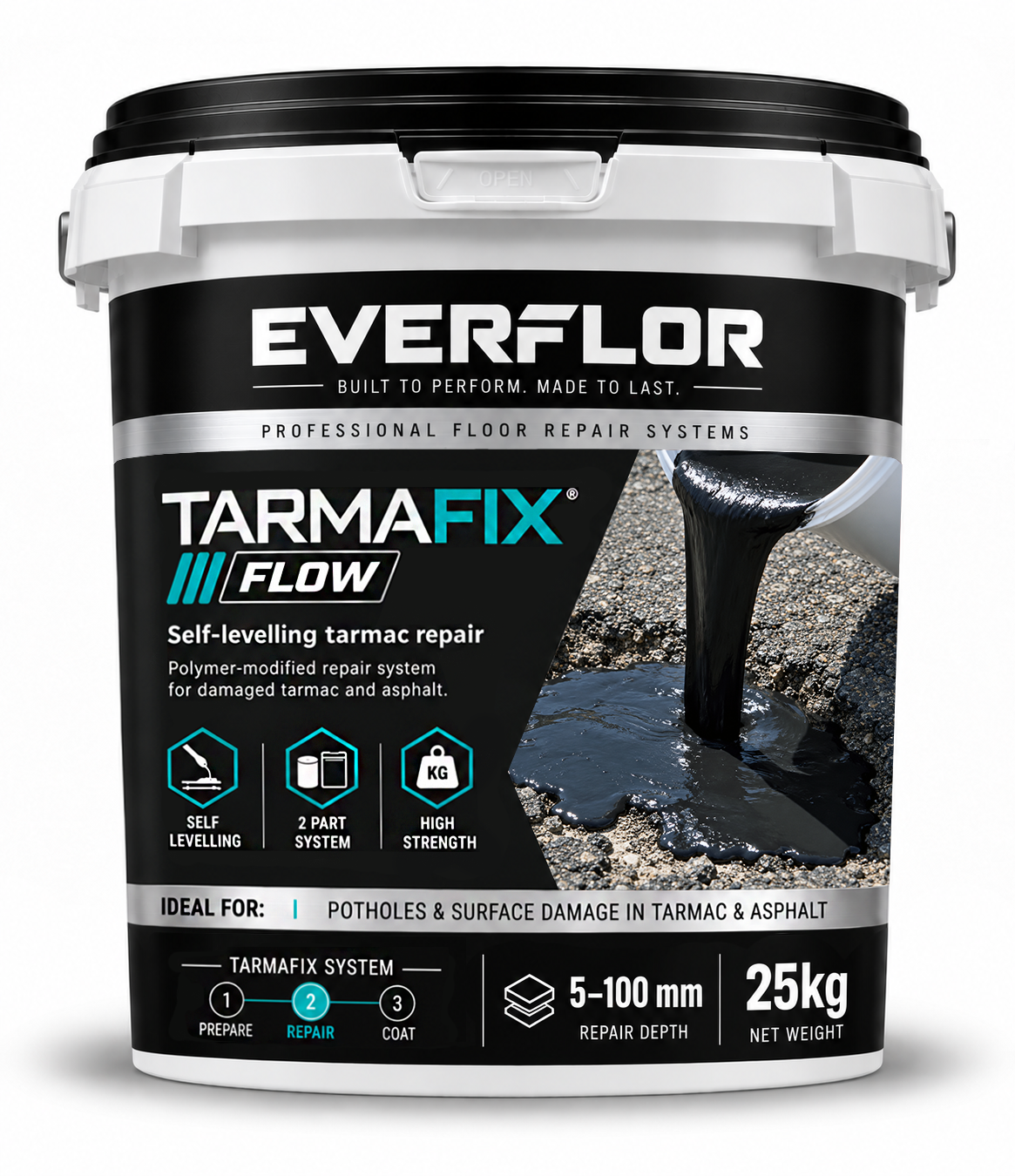
EverFlor - TarmaFix Flow - Pourable Tarmac Repair Mortar
Brand:EverFlor

EverFlor - TarmaFix Flow - Pourable Tarmac Repair Mortar

€310,95Unit price (€12,44  per  kg)
Self Levelling Pour

Flows Into The Repair

Forklift Ready

Industrial Grade Strength

Internal & External

Indoor & Outdoor Use

Damp Tolerant

Apply to Damp Surfaces

Deep Repair
Deep Repair

Fills Up To 100mm In One Pour

Foot Traffic Ready
Foot Traffic Ready

Walk On After 30 Minutes

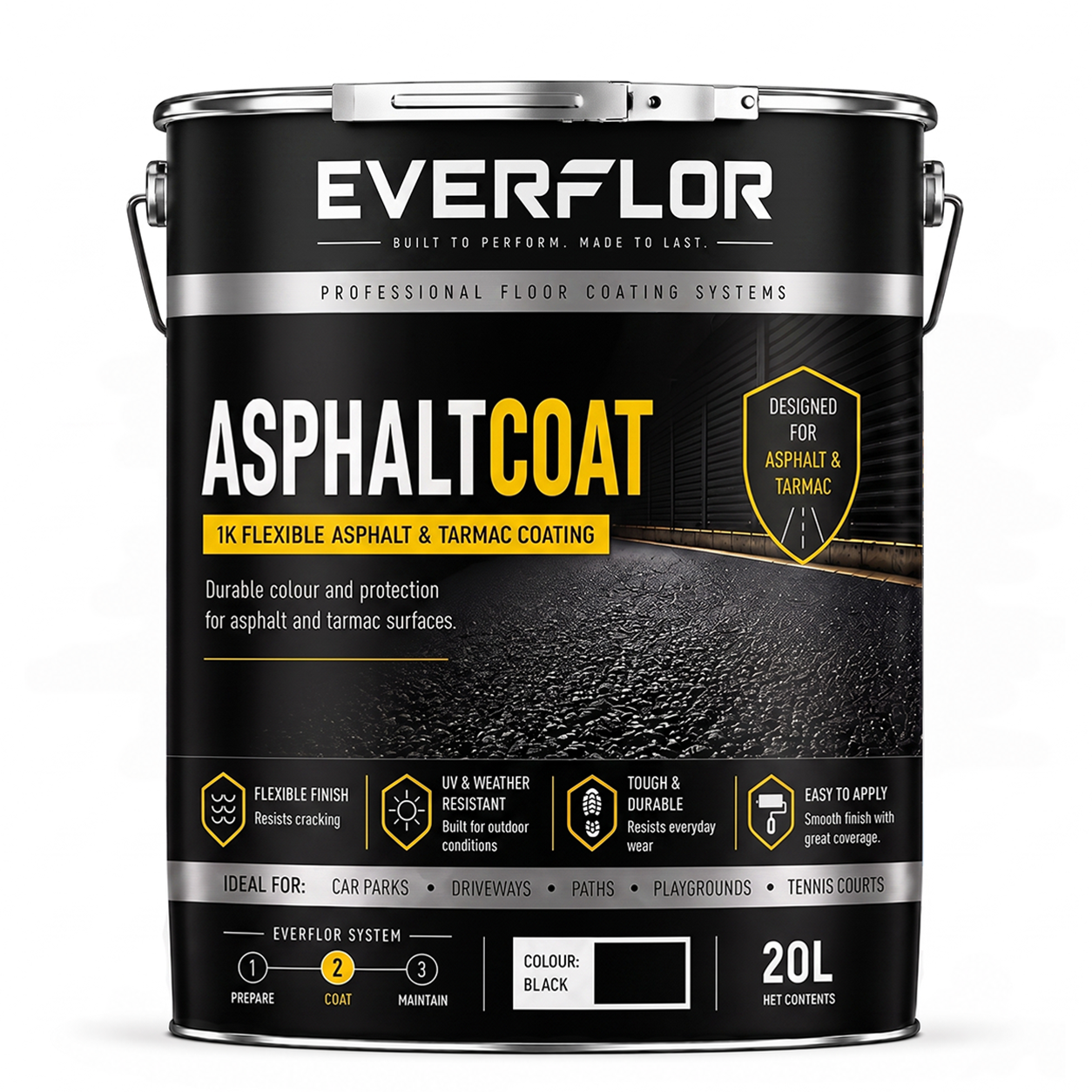
A 20L metal can of Everflor Asphalt Coat 1K Flexible Asphalt & Tarmac Coating in Black, shown on a clean white background.
Brand:EverFlor

EverFlor - AsphaltCoat

From €95,95Unit price (€19,19  per  l)
  • Black (RAL 9005)
  • Red Tarmac (RAL 3009)
  • Mid Green (RAL 6002)
  • White (RAL 9003)
  • Safety Blue (RAL 5015)
Asphalt Compatible

Flexible for Tarmac

UV Stable

Fade Resistant Coating

Water Based

Low Odour Formula

Quick Drying

Touch Dry in 2-4 Hours

Damp Tolerant

Apply to Damp Surfaces

Breathable Film

Lets Trapped Moisture Escape

4.9
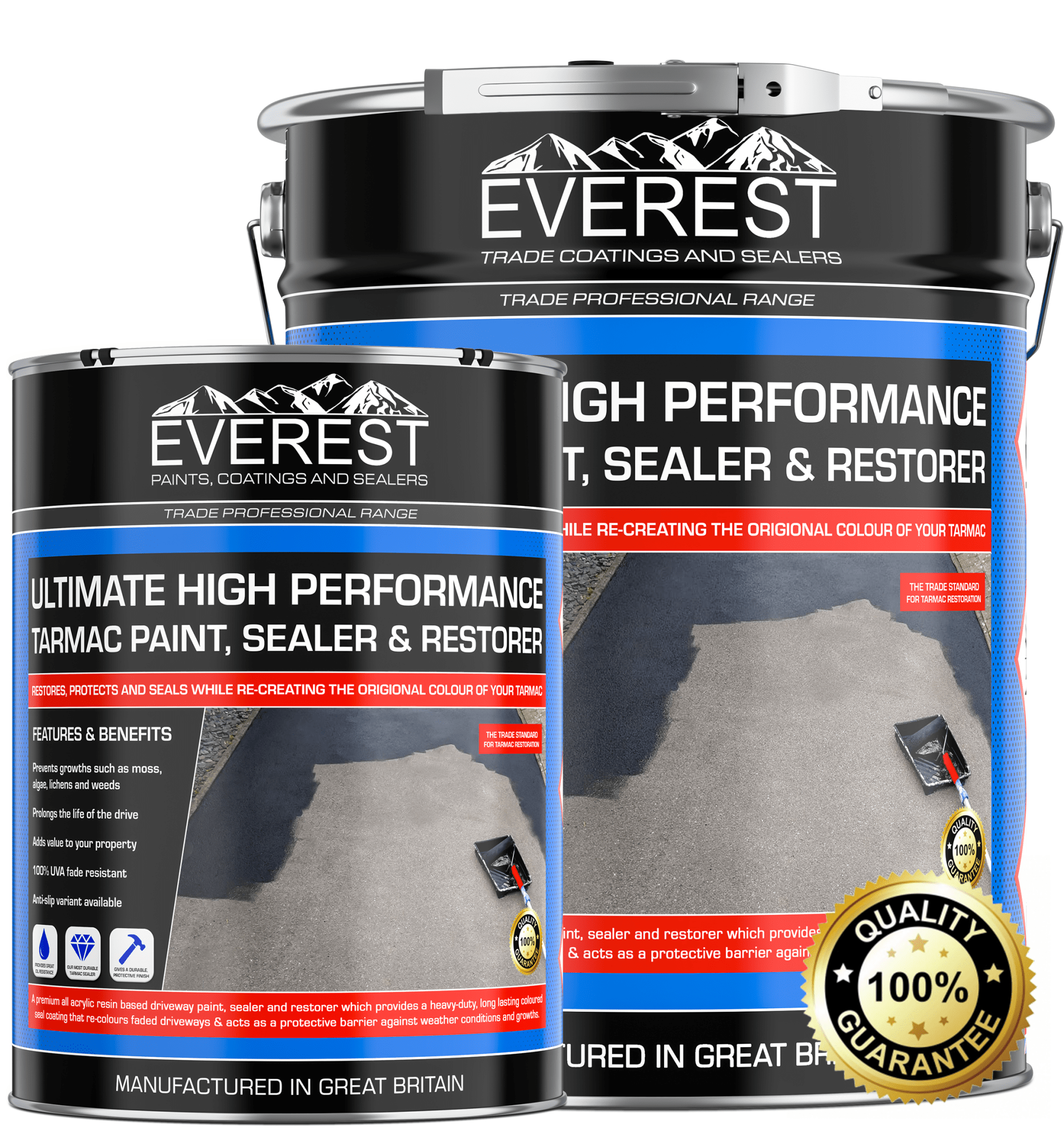
SummitSeal - TarmacCoat - Tarmac Sealer & Restorer - Anti - Slip - Everest Paints
Brand:SummitSeal

SummitSeal - TarmacCoat - Tarmac Sealer & Restorer

From €95,95Unit price (€19,19  per  l)
  • Black Tarmac
  • Red Tarmac

Crack and Joint Repair Systems for Asphalt and Tarmac Surfaces

Duty classification:
Light to Heavy Duty
Suitable substrates:
Asphalt Tarmac

System Overview

Cracks and open joints are the route by which water enters an asphalt surface. Once water reaches the layers below, frost and traffic widen the defect and loosen the material on either side. Crack and joint repair closes that route before a line of damage becomes an area of damage.

The work has three parts. The defect is cleaned out, the gap is filled, and the surface around it is sealed against water. The products in this range address rebuilding and sealing.

TarmaFix Flow is a pourable, fibre-reinforced polymer cement mortar. It is for potholes and worn areas, so it applies where cracking has already broken out into a hole. AsphaltCoat is a single-pack, water-based acrylic coating with a flexible, breathable film. TarmacCoat is an acrylic restorer for sealing and recolouring tired tarmac.

None of these is a dedicated crack filler or joint sealant. Open cracks and moving joints need a filler or sealant made for that purpose before any coating is applied.

Suitable Substrates & Surface Preparation

Asphalt and tarmac crack for different reasons, and the cause decides the repair. Fine surface crazing comes from age and weathering of the binder. Straight cracks often follow a construction joint or the edge of an earlier trench. Blocks of interconnected cracking point to a failing base.

Clean every crack and joint before it is treated. Remove weeds, moss, soil and loose aggregate along the full length, to the depth that can be reached. A stiff brush, a scraper and a blower are the usual tools.

The crack must be dry. Water held in a crack prevents adhesion of fillers and coatings alike. Let the surface dry after rain or washing, and treat oil or fuel staining before coating.

Where the edges of a crack have crumbled into a hole, take the loose asphalt back to firm material. That prepared hole can then be filled by pouring. Coating follows only after fillers and repairs have cured.

Performance Characteristics & Limitations

AsphaltCoat forms a film that flexes with the surface beneath it instead of cracking away from it. That matters on asphalt, which moves with temperature. The coating waterproofs hard standing as well as colouring and protecting it. Being resistant to UV and weathering, the shade resists fading.

TarmacCoat is formulated with a heavy-duty acrylic resin. It provides a durable barrier against fretting, oil stains and weed formation, and protects against aggregate loosening in high-traffic external environments. Fretting and loose aggregate are common along crack edges and joints.

TarmaFix Flow cures to a hard, dark grey cementitious repair that takes foot and forklift traffic the same day. At 20°C it is open to foot traffic after 30 minutes.

The limits are specific. A coating film seals the surface but does not fill an open crack. A crack that is still moving will show through a thin coating. A hard cementitious mortar is rigid, so it should not bridge a joint that is designed to move.

Internal vs External Considerations

Cracking in asphalt is mainly an external problem. Rain, frost, heat and sunlight age the binder, and vegetation takes hold wherever a gap collects soil. Both acrylic coatings in this range are made for external surfaces.

Carry out crack work in dry weather, on a dry surface, with no rain expected while materials cure. In cold conditions, allow longer for mortars to set and for water-based coatings to dry.

Internal asphalt floors, such as covered loading bays, crack less from weather. Load and movement at joints are the usual causes there. TarmaFix Flow is suitable for interior and exterior use on asphalt, tarmac and concrete. Internal joints that move still need a flexible joint sealant, not a rigid fill.

Selection Guidance & When to Specify Alternatives

Match the product to the defect. Fine, stable crazing on an otherwise sound surface is a sealing task. TarmacCoat is made to seal tired tarmac, and AsphaltCoat to waterproof hard standing. A crack that has broken out into a hole is a patching task for a pourable mortar.

An open crack between those two conditions needs a dedicated asphalt crack filler, and a moving joint needs a flexible joint sealant. Neither is among the products described here, so specify those materials separately. Coat over them once cured, subject to compatibility.

For isolated potholes, see the Asphalt Pothole & Hole Repair range. For recoating a whole worn surface, see the Asphalt Re-Surfacing & Screeding range.

Where cracking forms a connected block pattern, or the surface has settled along the cracks, the base has failed. Sealing will not correct that. The area should be assessed for reconstruction by a surfacing contractor.


Explore Tarmac and Asphalt Paints

Asphalt Cracks & Joint Repair FAQs

View All FAQ's

Technical Guidance & Application Advice

Cracks and joints in asphalt need a correct diagnosis before any material is chosen. The guidance below covers why sealing matters and how to clean and dry a crack. It explains what the coatings and repair mortar in this range do. It also shows where a dedicated crack filler or joint sealant is required instead. Limits are stated as plainly as the uses.

Why should cracks in asphalt be dealt with before the surface is coated or marked?

A crack lets water into the layers below the surface. Frost and traffic then widen it, and the asphalt on either side begins to break up. A coating or line marking applied over an untreated crack splits along the same line as the crack moves. Dealing with the crack first protects the base and gives the coating a continuous surface to bond to. Early repair also uses less material than a later patch.

How should a crack in tarmac be cleaned out before treatment?

Remove weeds, moss and roots along the whole length. Rake out soil and loose aggregate to the depth that can be reached. Brush the crack and blow it clean so the sides are free of dust. The crack must then be dry, since trapped water prevents adhesion. Deal with regrowth at the root where practical. Any asphalt that crumbles away during cleaning should be removed, not coated over.

Can AsphaltCoat or TarmacCoat be used to fill a crack?

Neither is a crack filler. Both are surface coatings. AsphaltCoat is a single-pack, water-based acrylic that forms a flexible, breathable film. TarmacCoat is an acrylic restorer for tired tarmac surfaces. A film of that kind seals the surface, but it does not fill the depth of an open crack. Fill the crack first with a dedicated asphalt crack filler, allow it to cure, then apply the coating over the whole area.

Where does a pourable repair mortar fit into crack repair?

It applies where cracking has gone further than a crack. The edges break away, and a hole or worn area forms. TarmaFix Flow can then be mixed with water, poured into the prepared hole and floated level. It cures hard and takes foot and forklift traffic the same day. It is a rigid cementitious repair, so it is not a filler for narrow cracks or a sealant for joints that move.

What is the difference between a crack and a joint in an asphalt surface?

A crack is unplanned. It forms where the surface has aged, shrunk or lost support. A joint is formed during construction, where a section of asphalt meets another, or meets concrete, kerbs, drainage channels or ironwork. Joints often open because the materials on each side move differently. A joint that moves with temperature or load needs a flexible sealant. A stable, weathered crack can be filled and then sealed over.

When does cracking mean the asphalt needs more than a crack repair?

Look at the pattern. Single cracks and open joints in a level surface are maintenance items. Interconnected cracking in blocks, and cracks with a step in level across them, indicate a failed base or sub-base. So does cracking that returns soon after repair. Sealing those areas does not restore support. They should be assessed by a surfacing contractor for reconstruction, with crack repair kept for the sound areas around them.

Didn’t find your answer?

Don't hestitate to contact us

Expert Advice & Guides

A few of our most recent guides applicable to this product range.

View Technical Hub

This section doesn’t currently include any content. Add content to this section using the sidebar.